
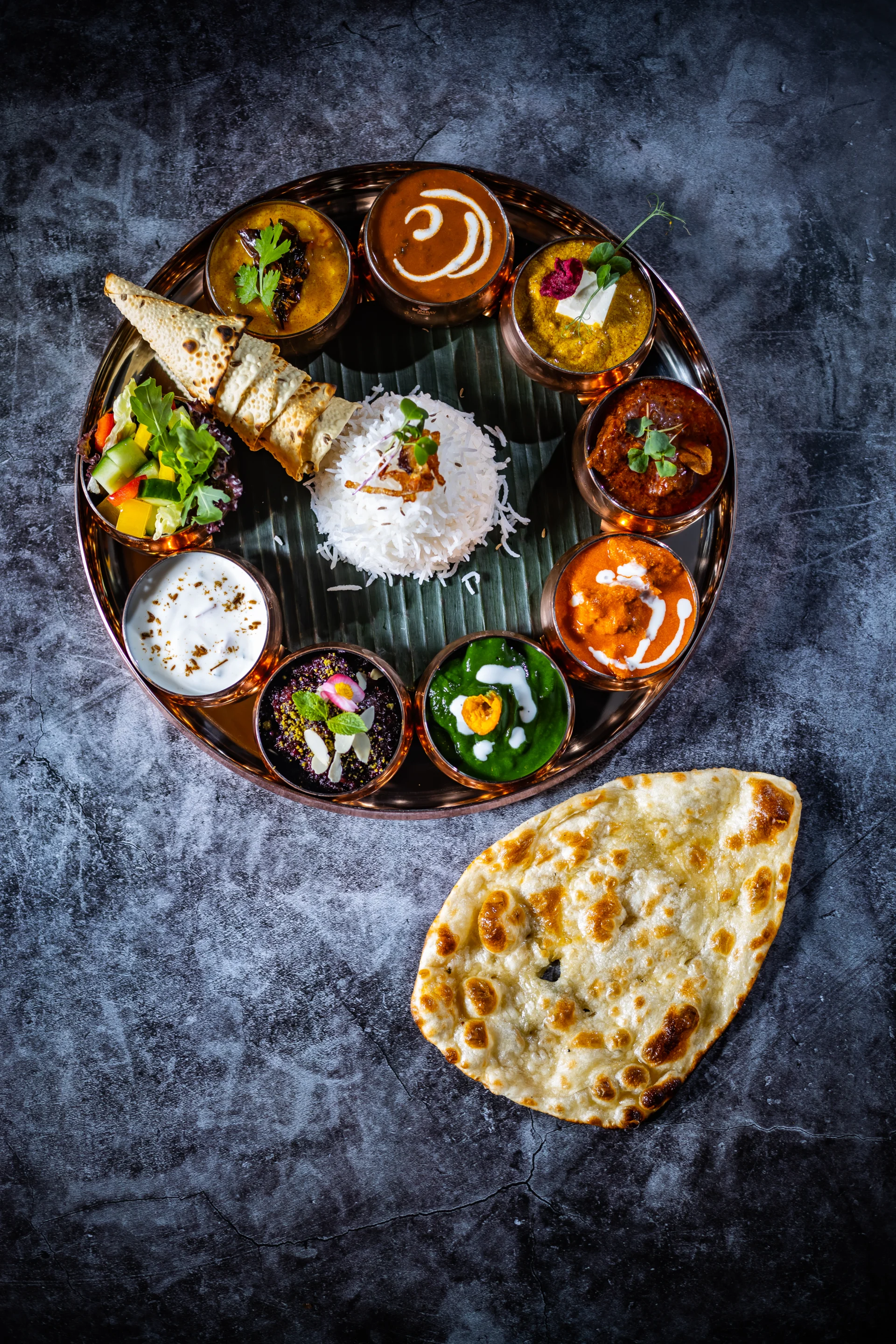
When you sit down to lunch in India, you are rarely given a single plate with a single dish. Instead a platter arrives, with several small bowls on it. This is the thali. Ours has nine items, and only one of them changes depending on which you order.
What is on the platter?
The dish that sets it apart: Royal Nawabi Shahi Paneer in the vegetarian version, Delhi Style Butter Chicken in the chicken one, Hyderabadi Nizami Lamb Handi in the lamb one, and Caldin, fish or prawn, in the seafood version.
The rest is always the same: dal makhini, diwani handi vegetables, basmati rice, buttered naan, crisp papadam, green salad, raita, and rice pudding to finish.
The structure is the point
The logic of a thali is that every basic taste is available at the same time. The raita cools the heat, the fresh salad balances the rich sauce, and the papadam adds a crisp texture that would otherwise be missing. You do not work through the bowls one after another; you mix as you go, mouthful by mouthful.
That is what makes the meal balanced without anyone measuring nutrients. The system took shape over centuries, and it differs from region to region: sweeter in Gujarat, more sour in the south, more buttery in the north.
How to eat it
- Start with the dal and the rice: that is the base.
- Tear the naan rather than cutting it, and use it to scoop up the thicker dishes.
- Leave the raita until the end; it closes the meal.
- Crumble the papadam over the rice rather than eating it on its own.
The four platters range from 3 980 to 4 780 forints. You will find them here.
 Hungarian
  English